


Horsepal
Horsepal Equine Health Check Kit
Horsepal Equine Health Check Kit
Couldn't load pickup availability
The Horsepal Health Check Kit is an essential addition to every horse owner’s first aid collection. Developed by Horsepal, a leader in equine wellness and training, it brings advanced Horse Vitals monitoring into your daily routine. Combining modern technology with practical horse management, this kit gives you a clearer, more complete picture of your horse’s wellbeing—from heart rate to temperature and beyond. It’s not just a tool, but a window into your horse’s health.
INCLUDES:
• Extra-long Bluetooth® equine thermometer
• Bluetooth® heart rate monitor
• Heart rate monitor handle with contact sensors
• Belt clip
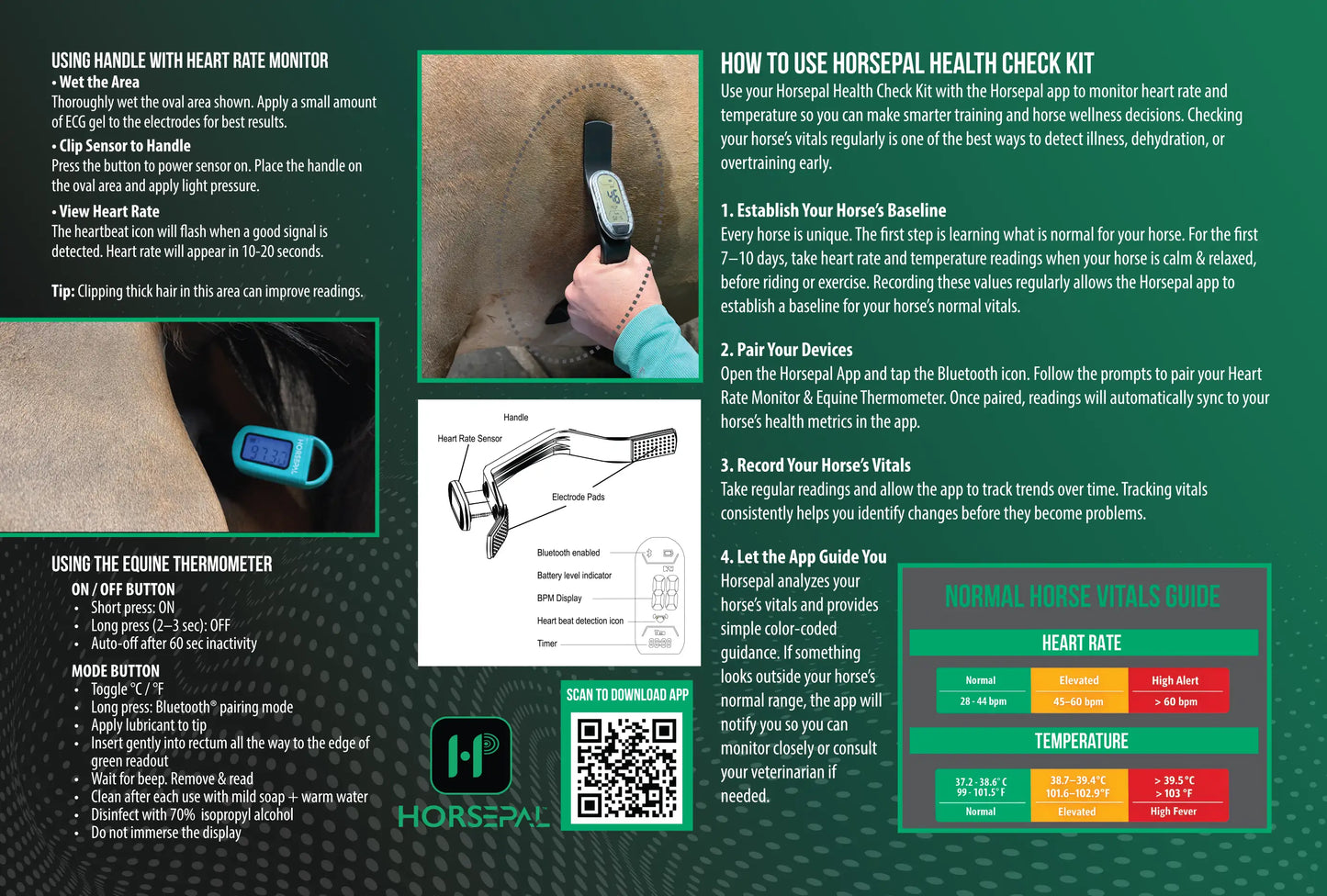
• Seamless syncing and tracking in the HorsePal app


Collapsible content
How can the Horsepal Equine Health Check Kit save me money on vet bills?
Emergency vet calls rarely happen at convenient times—they tend to come late at night, on weekends, or during holidays when costs are at their highest. A single emergency farm call can often cost $300–$800+ before treatment even begins.
The Horsepal Equine Health Check Kit helps you make more informed decisions before and during that call.
1. Know if it’s truly an emergency
By monitoring your horse’s core vitals—heart rate and temperature—you can quickly assess whether something is outside normal range.
• Is heart rate elevated at rest?
• Is temperature rising?
• Are both above your horse’s normal baseline?
This helps you determine whether to call immediately or continue monitoring.
2. Inform your vet before they even arrive
When you do call your vet, having real data changes the conversation.
Instead of saying “something feels off,” you can provide your vet with:
• Current heart rate
• Normal Resting Heart Rate
• Temperature readings
Changes from your horse’s normal baseline allows your vet to:
• Assess urgency more accurately
• Give guidance over the phone
• Prepare before arriving on-site
• Potentially reduce emergency fees or unnecessary visits
In many cases, your vet can make faster, more informed decisions because they already understand your horse’s condition before stepping onto your farm.
3. Establish a baseline before something goes wrong. The biggest advantage comes from using the kit before there’s a problem. By tracking your horse’s normal Horse Vitals, you can:
• Detect subtle changes earlier
• Catch potential issues before they escalate
• Act sooner—often reducing the need for costly treatment
Why it matters
If the Horsepal Health Check Kit helps you avoid even one unnecessary emergency farm call, it can more than pay for itself.
More importantly, it gives you confidence—knowing when to act, what to report, and how to support your horse’s health with real data—before your vet even arrives.
What are normal vital signs for a horse (heart rate and temperature)?
Normal horse vitals can vary slightly by individual, but general ranges for an adult horse are:
• Heart Rate: 28–44 beats per minute (bpm) at rest
• Temperature: 99.0°F – 101.5°F (37.2°C – 38.6°C)
The most important factor is knowing what’s normal for your horse. By tracking Horse Vitals consistently, you can establish a baseline and quickly recognize when something is outside their typical range. Small changes—especially in resting heart rate or temperature—can be early indicators that something isn’t right.
How often should I check my horse’s vitals?
For most horses, checking vitals a few times per week is enough to establish a reliable baseline. However, frequency should increase based on workload, environment, and any health concerns.
• Daily: During heavy training, extreme weather, travel, or competition
• Weekly: For general wellness monitoring
• Before & after rides: To track effort and recovery
• Any time something feels off: Even subtle changes are worth checking
Consistent monitoring allows you to spot trends over time and catch small changes early—before they turn into bigger issues.
What does an elevated heart rate mean in horses?
An elevated heart rate can indicate that your horse is working hard—but when it occurs at rest or is higher than normal for a given workload, it may signal something more.
Common causes of elevated heart rate include:
• Exercise or exertion
• Stress or excitement
• Heat or dehydration
• Pain or discomfort
• Early stages of illness
If your horse’s resting heart rate is consistently above their normal baseline, especially when paired with a slight increase in temperature or changes in behavior, it may be an early warning sign that something is developing.
Monitoring heart rate alongside other Horse Vitals helps you determine whether to continue training, monitor closely, or contact your veterinarian.
 Download on Google Play
 Download on App Store